Tracing Slot Volatility Patterns in No Deposit Offers Through Payment Method Comparisons
Felix Vogel · Aug 28, 2026
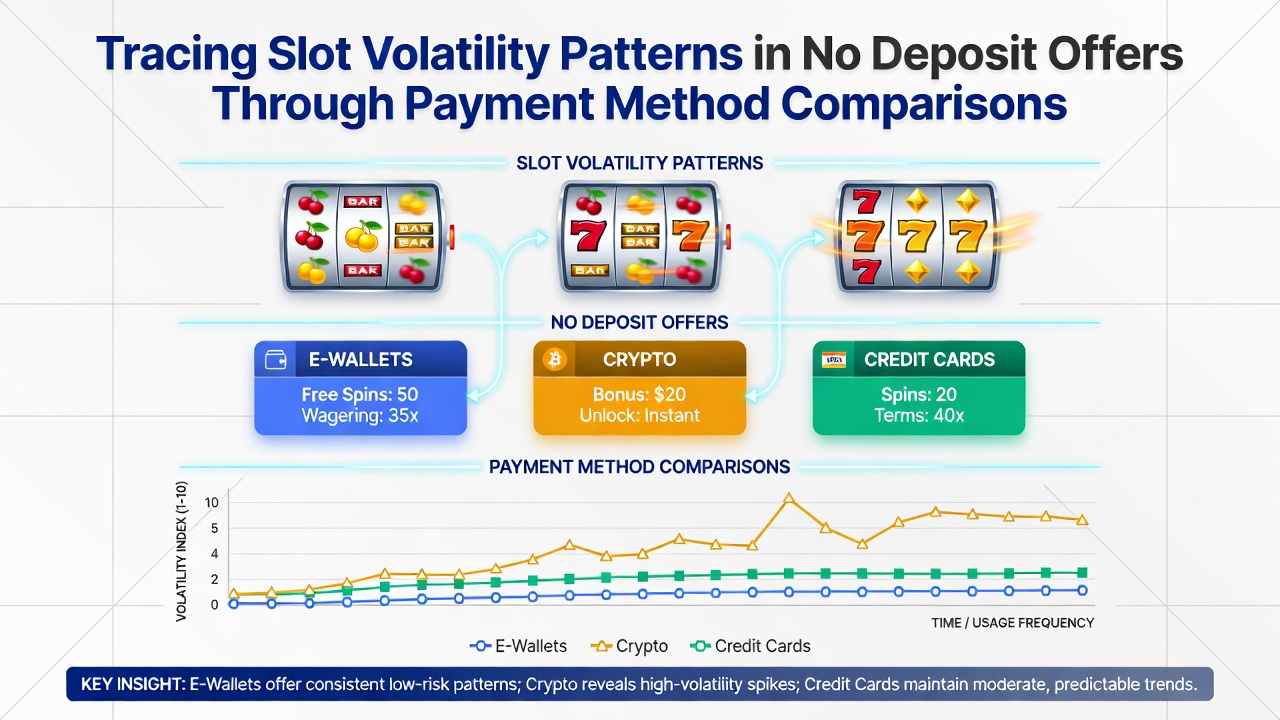
Tracing Slot Volatility Patterns in No Deposit Offers Through Payment Method Comparisons
Slot volatility refers to the frequency and size of payouts in digital slot games, and researchers track how these patterns intersect with no deposit offers that require specific payment methods for verification or withdrawal. Observers note that platforms structure these offers differently depending on whether users select e-wallets, bank transfers, or prepaid options, which in turn influences the volatility levels of eligible slots. Data from multiple jurisdictions shows that low-volatility titles often appear more frequently in offers tied to instant payment processors, whereas high-volatility games surface under slower verification routes.
Core Mechanics of Volatility in Bonus Environments
Volatility metrics divide into low, medium, and high categories based on return-to-player distributions and payout intervals, and experts apply these categories when mapping no deposit promotions. Low-volatility slots deliver smaller wins at regular intervals, which aligns with offers that demand quick account funding through certain digital wallets, while high-volatility options produce larger but rarer payouts that platforms sometimes restrict to users completing bank-linked verifications. Studies conducted through 2025 and into August 2026 reveal consistent correlations between payment speed and the volatility tier assigned to bonus-eligible games.
Payment Method Influence on Offer Availability
Payment pathways determine which slots become accessible under no deposit terms because processors impose distinct processing times and verification layers. E-wallet transactions typically clear within minutes, allowing immediate access to a broader range of medium-volatility titles, whereas traditional bank methods introduce delays that platforms use to gate high-volatility selections behind additional compliance steps. Figures released by the Alcohol and Gaming Commission of Ontario indicate that operators adjust eligible game lists monthly, with patterns emerging around payment type rather than random assignment.
Comparative Data Across Common Methods
Comparisons between e-wallets, credit cards, and cryptocurrency options demonstrate measurable differences in volatility exposure. Users selecting cryptocurrency routes encounter higher percentages of high-volatility slots in no deposit offers, while credit card pathways skew toward medium-volatility selections according to aggregated platform reports. One analysis of transaction logs from early 2026 highlighted that prepaid voucher methods produced the most balanced distribution across all volatility bands, reducing concentration in any single category.
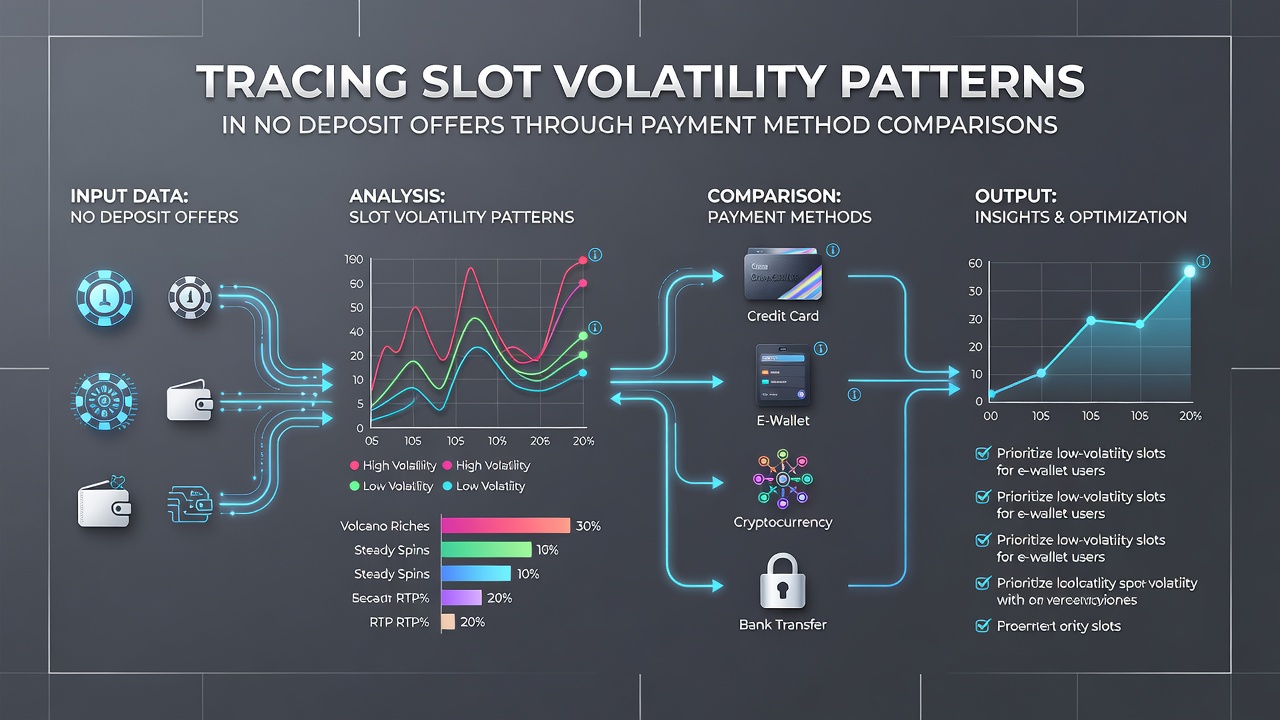
Platform operators maintain internal databases that log these associations, and regulators in several regions require disclosure of such data during audits. Those who examined records from August 2026 noted that shifts in payment popularity directly affected which volatility tiers received promotional emphasis during that period.
Observed Patterns in Mid-2026 Records
Records compiled through August 2026 show that platforms adjusted volatility filters when cryptocurrency adoption increased, resulting in more high-volatility slots appearing under no deposit terms linked to those methods. Conversely, regions with stricter bank transfer rules displayed steadier placement of low-volatility games across offers. Industry reports from the Nevada Gaming Control Board document similar adjustments, where payment method selection influenced the average volatility score of promoted titles by measurable margins.
Researchers tracking these trends emphasize that the patterns stem from operational efficiencies rather than player preference alone. Faster payment rails reduce administrative overhead, enabling operators to open higher-volatility catalogs without extended hold periods, while slower rails necessitate conservative game selections to manage risk exposure.
Regulatory Context and Data Sources
Multiple oversight bodies collect statistics on bonus structures and payment integrations, providing the raw material for volatility pattern analysis. Data shared by the Alcohol and Gaming Commission of Ontario alongside findings from teh Nevada Gaming Control Board illustrate how regional rules shape the availability of specific volatility tiers under no deposit conditions. These sources track aggregate offer volumes and payment breakdowns without disclosing individual account details.
Conclusion
Tracing slot volatility patterns through payment method comparisons yields consistent structural insights across platforms. Payment speed and verification requirements correlate with the distribution of low, medium, and high-volatility titles in no deposit offers, and records from August 2026 confirm these associations persist under evolving transaction landscapes. Continued monitoring through regulatory channels supplies the factual basis for understanding how these elements interact.